

February 4 | 11:05 AM ET
Artificial intelligence is reshaping the practice of teaching and learning, from course design and assessment to personalized feedback and student engagement. Yet as AI tools become more embedded in daily academic work, educators face pressing questions about responsible and ethical use.
In this thought-provoking conversation, Asim Ali (Auburn University) and Angela Gunder (Opened Culture; University of Arizona), bring a practitioner’s lens to what it means to use AI responsibly in higher education. Ali and Gunder will share practical strategies for balancing innovation with integrity, ensuring that AI-powered approaches enhance learning without introducing bias or eroding trust.
Following the session, attendees will join institution-based breakout discussions to apply ideas within their own contexts—or participate in a virtual town hall for open dialogue, resource sharing, and community reflection on responsible AI use across institutions.
Participants will gain actionable insights into:

February 5 | 11:05 AM ET
In higher education, neurodivergent learners (e.g. those with ADHD, autism, dyslexia, and other neuro-cognitive differences) are often faced with navigating instructional and institutional systems that were not built with their strengths and needs in mind. A significant body of research demonstrates the exceptional abilities of these individuals and highlights their creative and intellectual potential. By understanding the differences and exploring the needs of neurodivergent learners, we can provide them with learning environments that allow them to thrive and demonstrate their incredible talents.
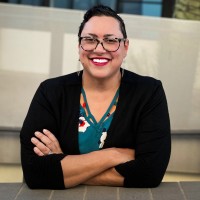
In this keynote, Megan Kohler, an award‑winning learning designer, researcher, and advocate for neuroinclusive pedagogy, will invite participants to reconsider their approach to learning design. Drawing on her research, she will present a strengths-based approach, advocating for the intentional design of educational experiences that empower and amplify the abilities of neurodiverse learners. She will present the Neurodiverse Support Framework, which addresses the three critical areas of support:
Attendees will explore concrete strategies and design principles that can be implemented across modalities (in-person, hybrid, and online) to foster more equitable, accessible, and flourishing learning experiences. Throughout, the talk will connect theory to practice, highlighting case examples and actionable ideas, from small tweaks to more systemic redesigns, to build learning environments where neurodivergent students can thrive.
This keynote is ideal for institutional leaders, faculty, instructional designers, disability services professionals, and anyone invested in inclusive excellence in postsecondary education.
 Megan Kohler is an Assistant Teaching Professor and Learning Designer at The Pennsylvania State University. With nearly 20 years of experience in Higher Ed, she specializes in designing innovative online, tech-enhanced, and blended learning experiences. She was awarded the 2021 Marion G. Mitchell Award for Innovative Teaching in recognition of the quality of her design work. Her research, supported by a Schreyer Institute Scholarship, focuses on supporting neurodivergent learners in higher education. Megan has held key leadership roles with the Online Learning Consortium's Accelerate Conference. She has served on EDUCAUSE’s Courseware Advisory Board, an initiative supported by the Bill and Melinda Gates Foundation. As a 2024 Teach Access Fellow, Megan advocates for inclusive and accessible learning experiences for all learners. Her co-edited book "The Multidisciplinary Instructional Designer" explores how cross-disciplinary skills can enhance an instructional designer’s innovation and creativity.